
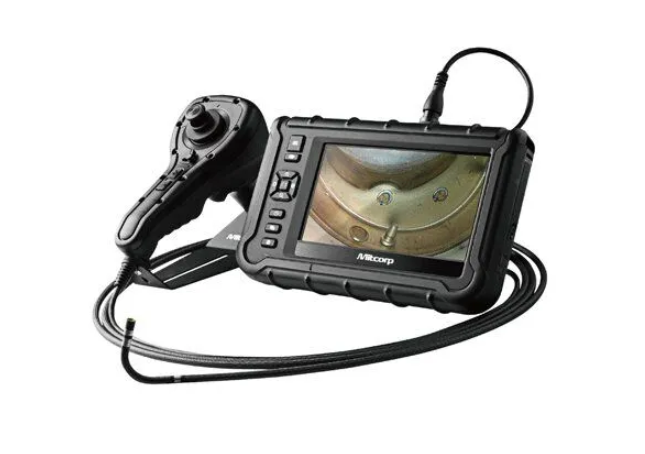
Aircraft engine inspections are all about getting reliable answers quickly. When performance trends shift, when a scheduled inspection comes due, or when a suspected event like foreign object damage needs a closer look, maintenance teams want clear visuals without unnecessary disassembly. That is why remote visual inspection has become a standard part of engine maintenance. The two tools most teams rely on are borescopes and videoscopes. They are often discussed as if they are interchangeable, but the best choice depends on access, inspection targets, documentation needs, and how often the tool will be used. Companies like USA Borescopes support aviation maintenance teams by supplying inspection equipment designed for the realities of modern engine work, from on-wing checks to shop inspections.
Understanding the Differences Between a Borescope and a Videoscope
In practice, the term borescope is sometimes used as a catch-all for internal inspection tools. Traditionally, a borescope referred to an optical instrument, often rigid, that uses lenses to transmit an image to the viewer. A videoscope is a camera-based system that displays a live digital image on a screen. Today, many aviation teams use flexible video borescopes, which combine features of both categories. Still, the differences are useful when deciding what tool fits your use case.
Rigid borescopes
Rigid borescopes are straight, non-flexible instruments, often with interchangeable viewing angles. They typically deliver excellent optical clarity because the image is transmitted through a lens system rather than a camera chip at the tip. Rigid borescopes are best for inspections where access is straight and consistent, and where the target area can be viewed without navigating around tight bends.
Flexible borescopes and videoscopes
Flexible systems use an insertion tube that can bend and route through complex internal paths. The tip may articulate to allow steering. Videoscopes provide a live video image and usually include capture, storage, and transfer features that support documentation. In many engine inspections, especially on-wing, flexibility and articulation are essential because access paths are rarely straight.
The real decision
For most maintenance teams, the practical decision is not about definitions. It is about what tool will reach the inspection target reliably, provide clear imagery, and support accurate documentation with the least disruption to the maintenance task.
Key Decision Factor One: Access and Engine Design
Access is often the first factor that determines your tool choice. Even the best imaging is useless if the probe cannot reach the target area without risky maneuvering.
When access is straight and predictable
If the inspection point allows straight insertion and the target surfaces are aligned with the access path, a rigid borescope can be highly effective. Some shop inspections, certain accessory inspections, and straightforward sightlines can favor rigid systems.
Rigid borescopes can also be easier to stabilize. Because the instrument is straight and firm, it can hold a view with minimal movement. This can be helpful when inspecting a specific area for fine detail.
When access requires navigation
Most on-wing engine borescope inspections require navigating around curves, turning into different stages, and angling the view toward edges, platforms, or cooling features. In those cases, a flexible videoscope is usually the better option. Articulation allows inspectors to steer the tip, look around corners, and inspect surfaces that cannot be viewed straight-on.
Engine designs vary, so the same tool that works well for one fleet may not be ideal for another. That is why many organizations standardize on a few configurations, rather than trying to solve every inspection task with a single system.
When a Borescope Is the Better Choice
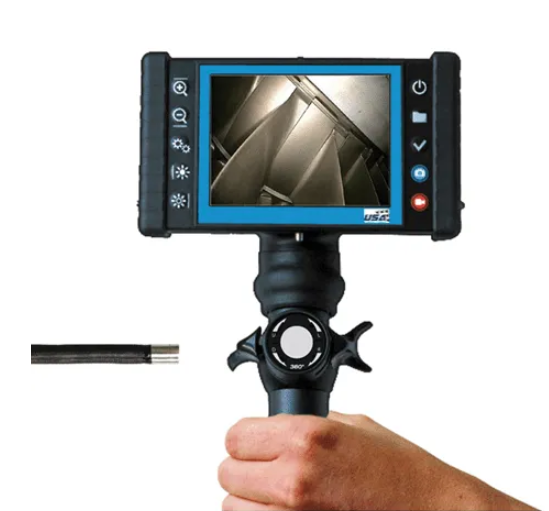
A borescope, especially a rigid optical borescope, can be the right tool when clarity and stability matter more than navigation.
High optical clarity for specific targets
Rigid borescopes can provide crisp visuals that are valuable when an inspector needs to confirm fine surface detail. When viewing conditions are stable and the inspection target is accessible without complex routing, optical clarity can be a major advantage.
Durability in straightforward inspections
Rigid systems are often robust. For inspections where the scope does not need to bend or articulate, a rigid borescope can be a durable, lower-complexity solution.
Cost efficiency for limited applications
If a maintenance team only needs internal visuals for a narrow set of tasks with straight access, a rigid borescope may meet the requirement without the added features and cost of a full videoscope system.
Training simplicity
Rigid borescopes can be easier to train on in certain contexts because the inspector is not simultaneously managing insertion tube flexibility, articulation, and camera orientation. This can matter for teams that are building inspection capability from the ground up.
When a Videoscope Makes More Sense
For most aircraft engine inspections, a videoscope or flexible video borescope provides broader capability.
Tight spaces and complex routes
Engines are designed for performance and efficiency, not for easy access. Inspectors often have to reach deep into stages where direct sightlines do not exist. A videoscope can route through these paths, and articulation lets the inspector check edges, tips, and surfaces that would be invisible to a rigid tool.
Documentation and collaboration
Videoscopes shine when documentation matters. A live digital image can be captured as stills or video, then attached to a maintenance record. This allows engineering, quality, or manufacturer support teams to review findings without needing to be physically present for the inspection.
This is especially valuable when a finding is borderline. Instead of relying on a verbal description, the team can share clear visuals and align on the next action quickly.
Measurement and repeatability
Many modern videoscopes offer measurement tools and image enhancement options that support more consistent reporting. While measurement features are not a substitute for engineering judgment, they can help standardize defect descriptions and speed the assessment process.
Versatility across systems
Videoscopes are not limited to engine work. Many teams use them for accessory inspections, structural cavity checks, and other tight-access tasks. This versatility can improve return on investment, especially for maintenance organizations that want one tool that supports multiple inspection needs.
Maintenance teams that want to compare configuration options, including probe diameters and articulation styles, often review available systems on the USA Borescopes products page.
Key Selection Criteria for Maintenance Teams
Once access requirements are clear, teams can compare tools based on the factors that affect inspection quality and workflow.
Access points and required probe diameter
Probe diameter must match access ports and internal routing. Smaller probes can reach more areas but may have different durability characteristics depending on design. Teams should consider the typical engines and access ports they work with most often, not just one-off tasks.
Image requirements and lighting control
If the work involves hot section inspections, lighting control matters. Reflective turbine surfaces can create glare, while deposits and discoloration can reduce contrast. A tool that allows adjustable illumination and produces sharp images under difficult conditions will reduce missed findings and false calls.
Articulation and handling
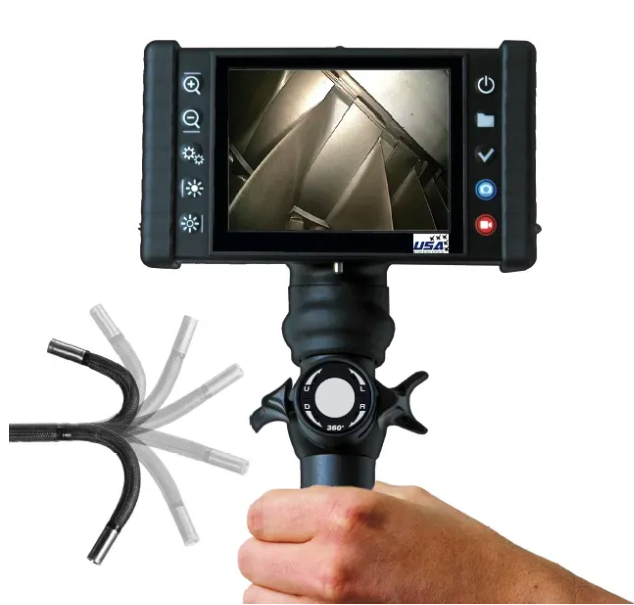
Articulation is critical when the inspection requires looking around corners or viewing surfaces at different angles. Controls should be smooth and predictable. Poor articulation can lead to incomplete inspections because the inspector cannot position the camera accurately.
Documentation and data management
If inspections need to be documented for audits, trend monitoring, or engineering review, a videoscope with reliable capture and transfer features can be a better fit. The ability to organize images by engine, stage, and date supports repeatability.
Frequency of use and durability expectations
A tool used daily needs to be durable and supported with accessories and service options. A tool used occasionally might prioritize simplicity. Teams should be honest about how often the scope will be used and in what environments, including line maintenance conditions where tools are transported and set up frequently.
Budget and total cost of ownership
The purchase price is only part of the decision. Downtime, repairs, accessories, and training time all affect total cost. A cheaper tool that produces unreliable images can cost more in the long run if it leads to repeated inspections or unnecessary removals.
Match the Tool to the Inspection Task
Choosing between a borescope and a videoscope is not about picking the most advanced tool on paper. It is about selecting the tool that will reach the inspection area reliably, produce clear visuals, and support accurate documentation in the real maintenance environment. Rigid borescopes can be ideal for straight access and high clarity needs. Videoscopes are often the better choice when access is tight, routing is complex, and documentation matters.
For aviation maintenance teams evaluating inspection tools, USA Borescopes offers equipment options designed for aviation inspection workflows, including configurations that support on-wing engine inspections and repeatable reporting. Teams that want help selecting the right system for their engine types and inspection requirements can contact USA Borescopes to discuss options.
About the Author
The author is an aviation maintenance and inspection specialist with extensive experience in remote visual inspection programs and engine condition assessment. Their work focuses on inspection technique, tool selection, and documentation practices that improve consistency and reduce unnecessary downtime. They share practical guidance shaped by real maintenance environments where access is limited and accurate decisions matter.